
Last updated: 2 August 2026
Content strategy case studyContent Strategy Case Study: How One Blog Post Earned 166 Backlinks and $7K+ in Revenue
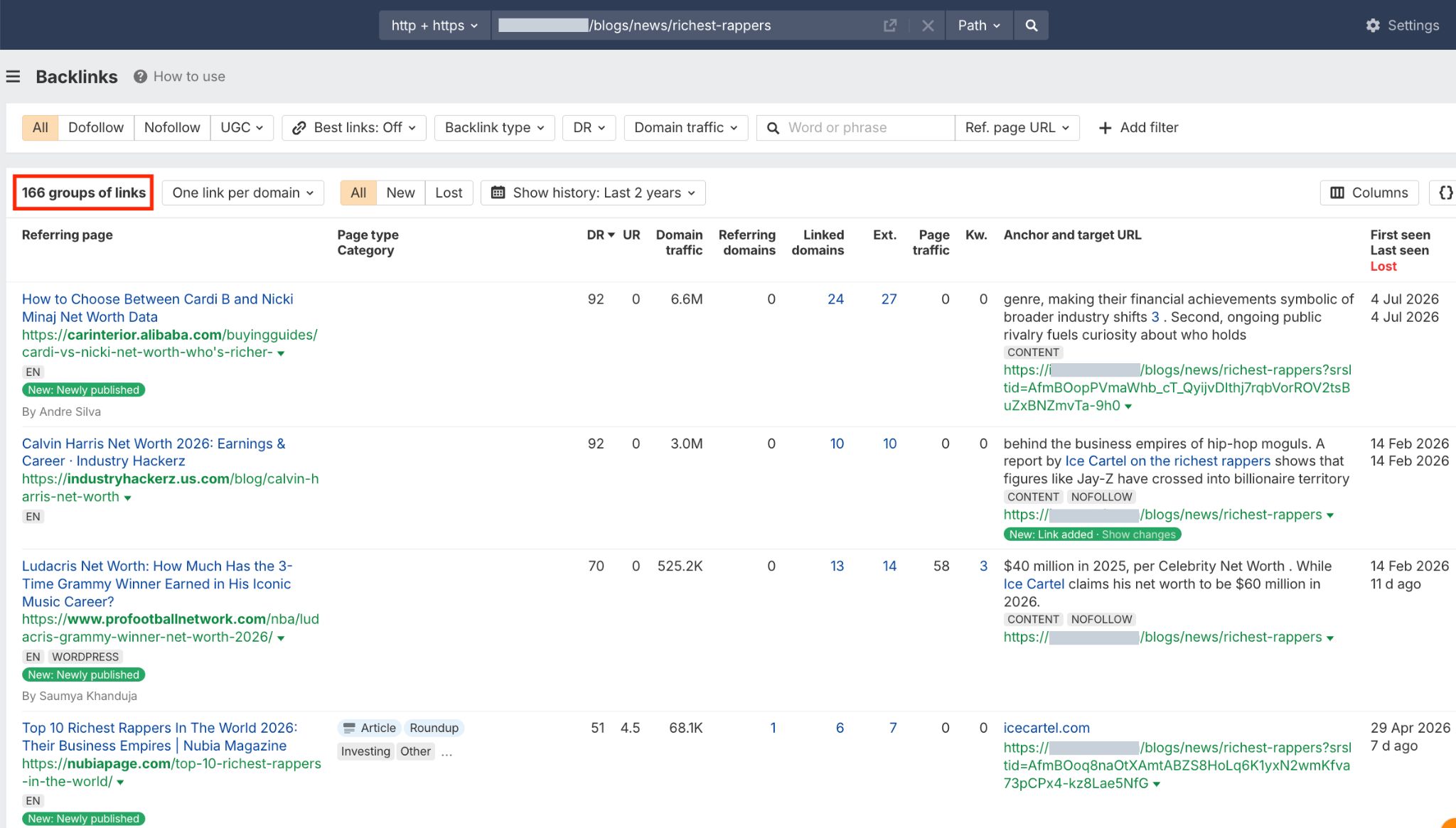
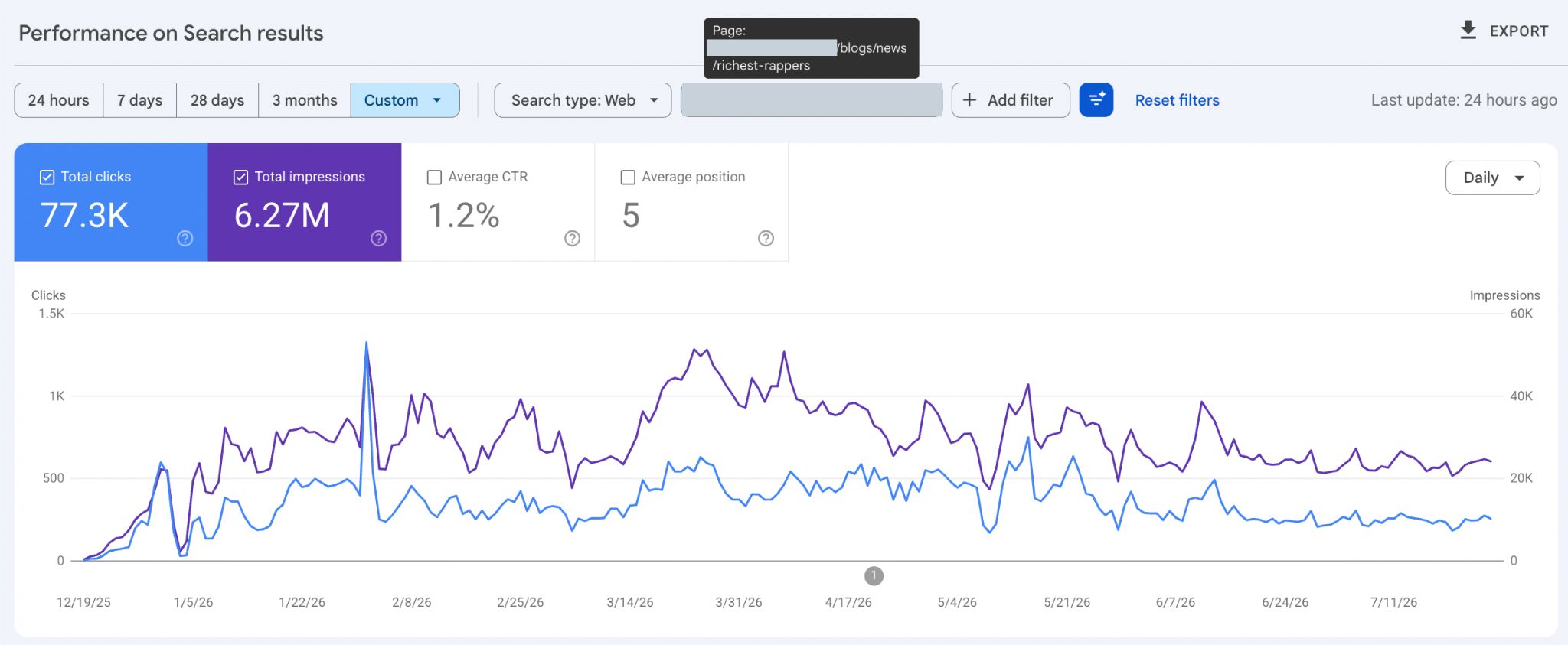
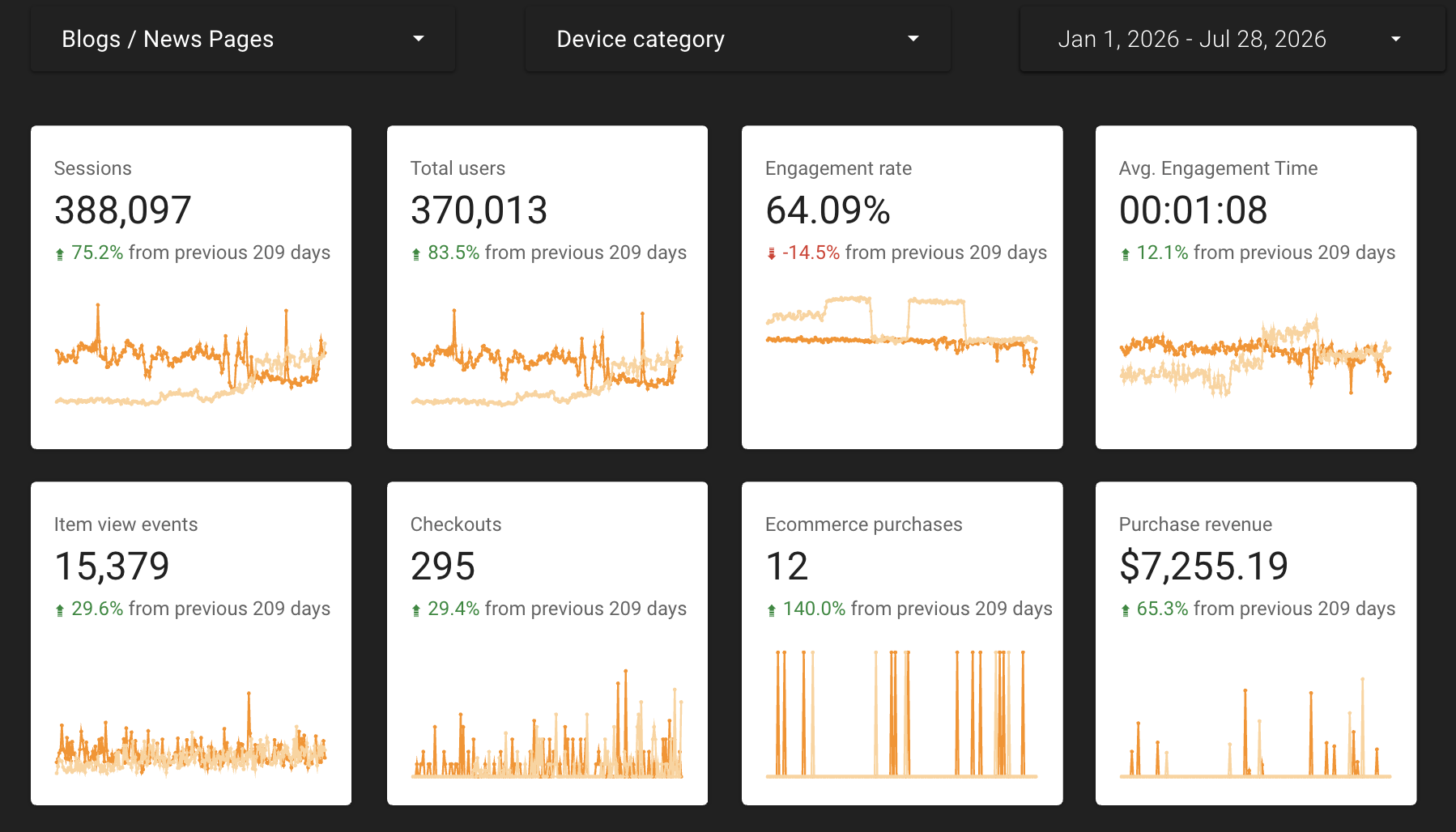
A data-driven listicle on a celebrity net worth topic ended up outperforming everything else on the site. It picked up 166 backlinks on its own, brought in 77.3K clicks and 6.27M impressions from Google, and became part of a blog content cluster that now drives over $7,000 in revenue. No outreach emails. No paid links. No PR agency.

Services used
Overview
I run SEO for a commerce brand that also publishes blog content. One post — a data-driven listicle on a celebrity net worth topic — ended up outperforming everything else on the site.
It picked up 166 backlinks on its own, brought in 77.3K clicks and 6.27M impressions from Google, and became part of a blog content cluster that now drives over $7,000 in revenue. No outreach emails. No paid links. No PR agency.
This case study walks through exactly how that happened, from picking the topic to what the results look like today.
The challenge
The brand needed more organic traffic and more backlinks, but the usual playbook for backlinks — cold email outreach, guest posts, paid placements — takes time, money, and a lot of follow-up with little guarantee of a reply. I wanted to test a different approach: build one page so useful and so current that other sites would want to link to it without being asked.
The catch was picking a topic that could actually pull this off. It had to have real search demand, room for a fresh angle, and some connection back to the brand, or the traffic wouldn't mean anything for the business.
The core problem
Backlinks were the bottleneck, and every standard way of getting them cost either money or months of follow-up. The test: could a single page earn links purely on merit — and could it be chosen so the traffic still meant something commercially?
The strategy
I settled on a topic with three things going for it.
- ✓Steady search demand. Interest that doesn't fade with the season, so the page keeps working long after it's published.
- ✓An audience that overlaps with the brand's actual buyers. Traffic only counts if the people arriving could plausibly buy something.
- ✓Beatable competition. The top-ranking pages were outdated or thin, and not backed by huge budgets.
Before writing anything, I studied who was already ranking. Most of the top results were generic aggregator sites and finance blogs. They had authority, but their content was stale and disconnected from any brand or audience. That gap was the opening.
From there, I mapped out exactly what was missing: fresh numbers, a clear data table, and a visual breakdown readers could scan instead of wading through paragraphs. The plan was simple — build the most useful, most current page on the topic, structure it so it's easy to read and easy to cite, and let it earn links on its own merit.
The execution
Four decisions did most of the work.
-
01
Structure built for skimming
Clear headers for each entry and an updated data table. Every section was written to be skimmable, since most readers — and most linking writers — only need the key numbers, not the full story.
-
02
Schema markup for rich results
The post was marked up so it could show up as a rich result in search, which lifts click-through on a page that's already competing against bigger domains.
-
03
Internal links to real product pages
The post was linked internally to relevant product pages, so any reader who clicked through had somewhere useful to land instead of a dead end. This is what turned informational traffic into revenue.
-
04
No promotion at all
Then I published it. No outreach emails went out. No one was paid to link to it. The only promotion was making sure the page itself was worth linking to.
The results
Here's what happened after publishing.
| Metric | Result | Detail |
|---|---|---|
| Referring domains | 166 | Earned with zero outreach — other blogs in the niche cited it as a source |
| Clicks from Google | 77.3K | Search Console, since the post went live — still climbing |
| Search impressions | 6.27M | Search Console, since the post went live — still climbing |
| Revenue | $7,000+ | Attributed to the blog content cluster this post is part of |
| Outreach emails sent | 0 | No guest posts, no paid placements, no PR agency |
None of this came from a single outreach email or a paid placement. It came from one page that was simply better than what was already ranking.
The biggest lesson here is patience with the right kind of content. This post didn't rank or earn links overnight. It built up steadily because it kept being the best answer available. That's a slower path than outreach, but it doesn't stop working once the campaign ends.Mishon SEO consultant & growth partner
Key takeaways
Links don't have to be asked for. If a page is more useful, more current, and easier to reference than everything else ranking for a topic, other writers will link to it because it makes their own content better. That's a real incentive, and it doesn't wear out the way outreach lists do.
Pick topics with steady demand and a real link to what the business sells
Not just what's trending. Seasonal spikes fade; a page tied to what you actually sell keeps paying.
Study the competition before writing
The gap between what's ranking and what's actually useful is where the opportunity sits.
Make the content easy to cite
Clear data, clear structure, and a page that answers the question fast earns links from people who need a source — not from people you asked for a favour.
Content and commerce don't have to be separate goals
A page built for search visibility can also carry real revenue, if it links back to something worth buying.