
Last updated: 7 August 2026
Programmatic SEO case studyProgrammatic SEO Case Study: How I Took a Brand-New Domain From Zero to Real Organic Traffic
A white-label link building marketplace with 8,000+ publisher sites, and a domain with no backlink history, no brand searches, and no organic footprint. Using programmatic SEO built around real per-site data instead of templated filler, the site went from zero organic presence to daily traffic in the tens of thousands — still climbing months after launch.
Services used
Overview
I ran SEO for a white-label link building marketplace with thousands of publisher sites in its inventory. The problem was simple to state and hard to solve: the domain was brand new.
No backlink history, no brand searches, no organic footprint. Meanwhile, buyers were already searching for exactly what the marketplace sold, thousands of times a month, and none of those searches were landing on our pages.
Using a programmatic SEO approach built around real per-site data instead of templated filler, I took the site from zero organic presence to daily traffic in the tens of thousands, with the growth still climbing months after launch. This case study is a full breakdown of the strategy, the execution, and the actual numbers, including the parts that didn't go perfectly.
The challenge
The demand already existed. People search things like "guest post on [site]" or "buy a backlink on [site]" before they buy, and that search volume was happening across the catalog every single month. The marketplace had over 8,000 sites in its inventory and zero pages capturing any of that intent.
The obvious playbook didn't fit the size of the problem. Writing a unique page by hand for every listing would take a content team months, and by the time it shipped the catalog would already look different. Paid ads could buy clicks, but the spend would stop compounding the moment the budget ran out. Doing nothing meant leaving thousands of high-intent searches on the table every month, indefinitely.
The brief
Capture existing demand across the entire catalog fast, at a cost that made sense for a domain starting from absolute zero.
The strategy
Programmatic SEO gets a bad reputation because most people use it to generate volume, not value. Thousands of thin, near-identical pages get crawled once, ignored, and quietly deindexed. I went in with one governing rule: Google indexes pages that deserve to be indexed.
- ✓One genuinely useful page per listing. The goal was never page count for its own sake — it was one page answering a question a buyer was already typing into Google.
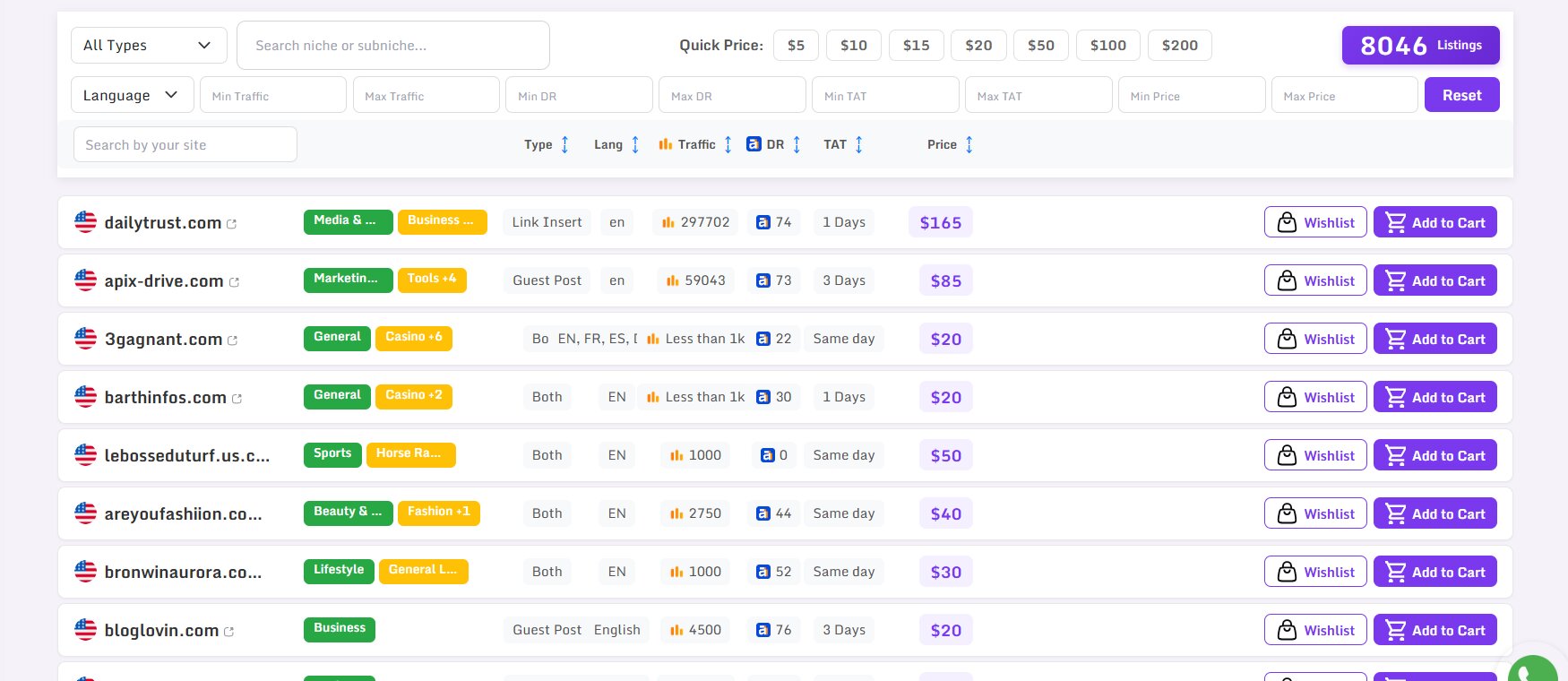
- ✓Real data on every page. Each page profiled one real site in the inventory: Domain Rating, Domain Authority, actual monthly traffic, dofollow and permanence status, delivery time, price, and a direct path to purchase.
- ✓Distinct data, not spun text. That real per-page data is what separates a programmatic page that ranks from a doorway page that doesn't.
The execution
Four decisions did most of the work.
-
01
Built one template, populated it from a structured dataset
A single page template pulled real per-listing data and published it at scale, producing thousands of pages in a tight window rather than months of manual writing.
-
02
Treated indexing as the actual project, not a formality
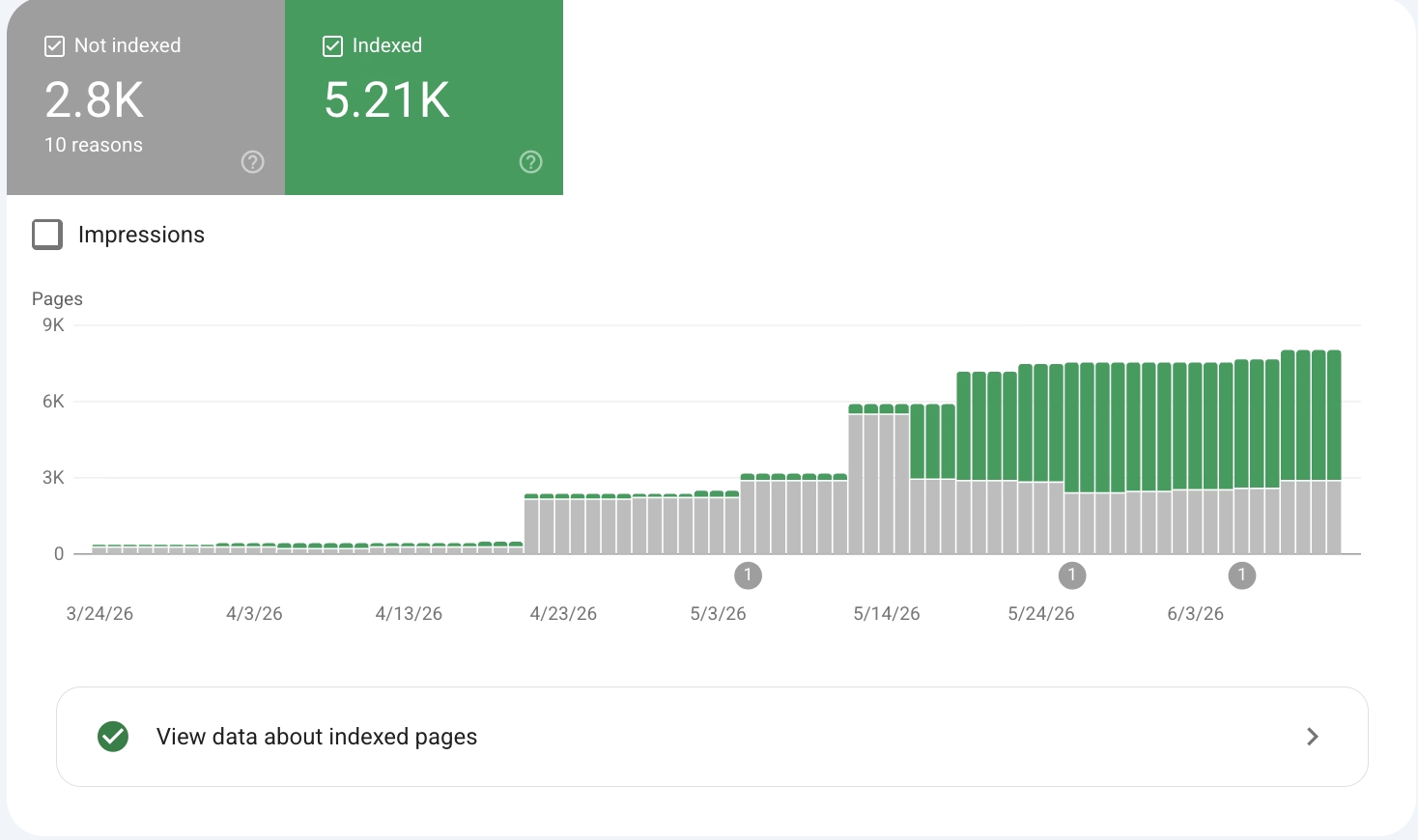
Publishing 8,000 pages is the easy part. Getting Google to crawl and index them is where most programmatic projects stall. I built a clean XML sitemap that exposed the full catalog and used disciplined internal linking to push crawl equity through every listing instead of letting it pool at the homepage. The architecture was designed for indexing from day one, not patched on after the fact.
-
03
Let the data carry the ranking case
No keyword-stuffed intros, no filler paragraphs to hit a word count. Each page's value was the numbers on it: what the site's authority looked like, what it would cost, how fast delivery would be.
-
04
Tracked GSC and Ahrefs separately, and labeled them as different things
Search Console shows what Google actually measured. Ahrefs shows an estimate. I never let one stand in for the other when reporting results.
The results
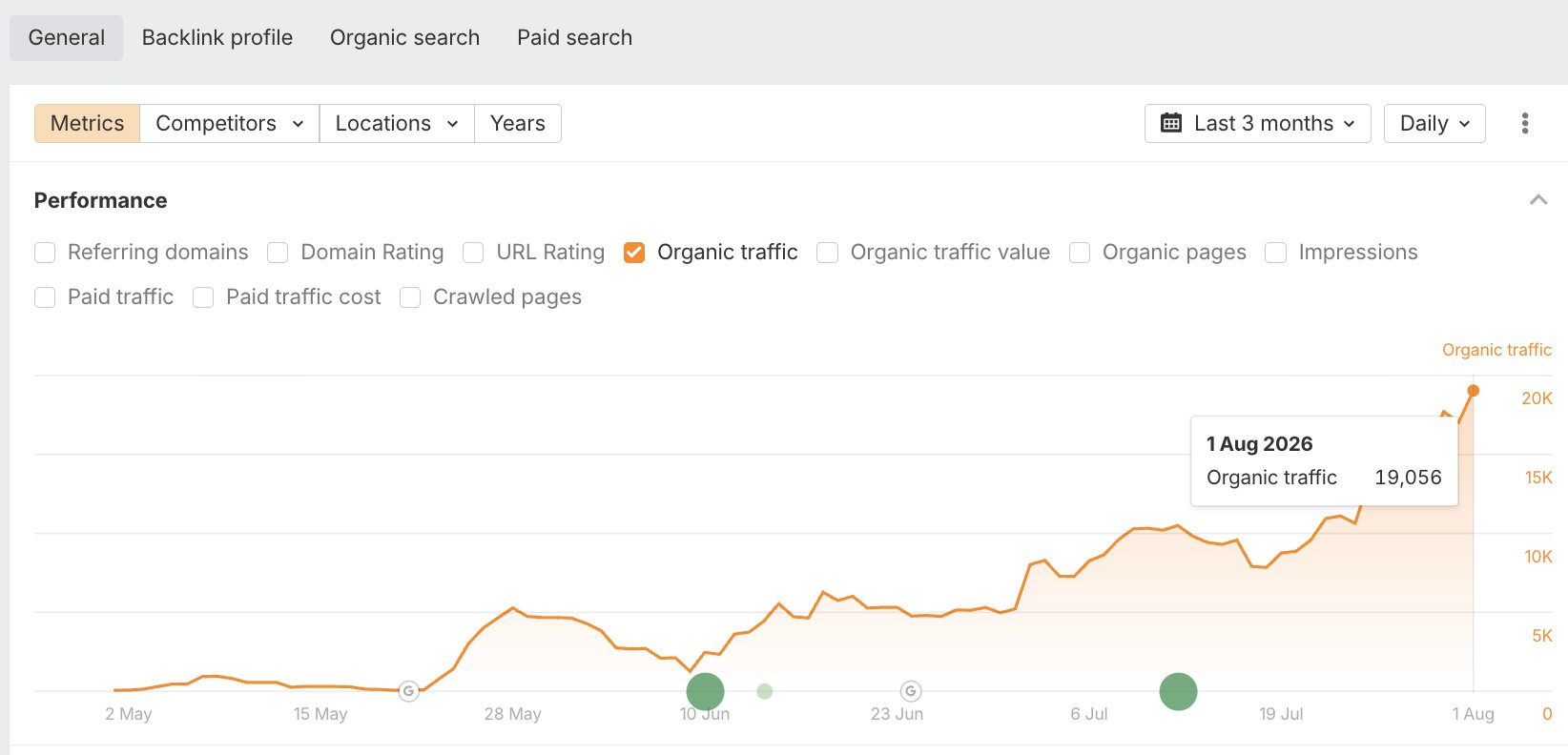
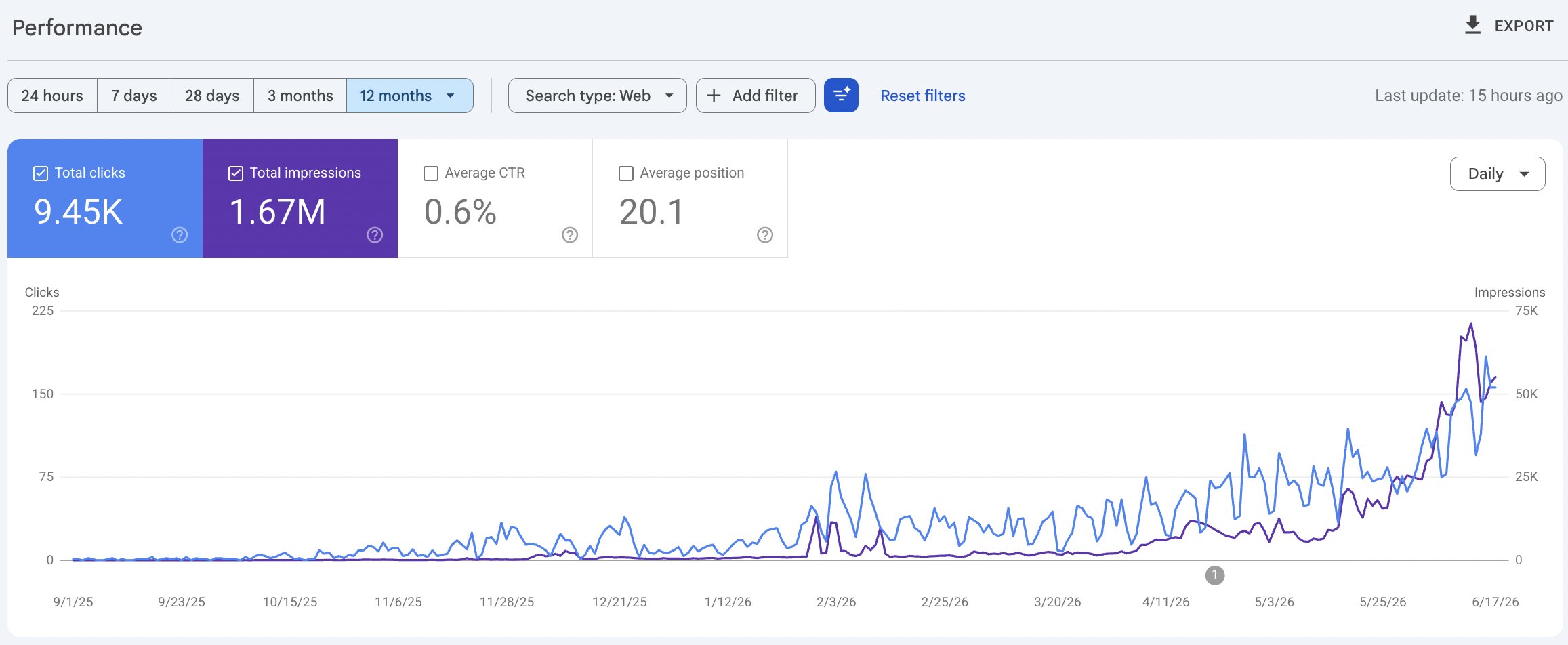
Here's what the numbers look like as of this writing.
| Metric | Result | Detail |
|---|---|---|
| Organic traffic | 19K+/day | Ahrefs estimate — from near-zero at launch, trend still pointing up |
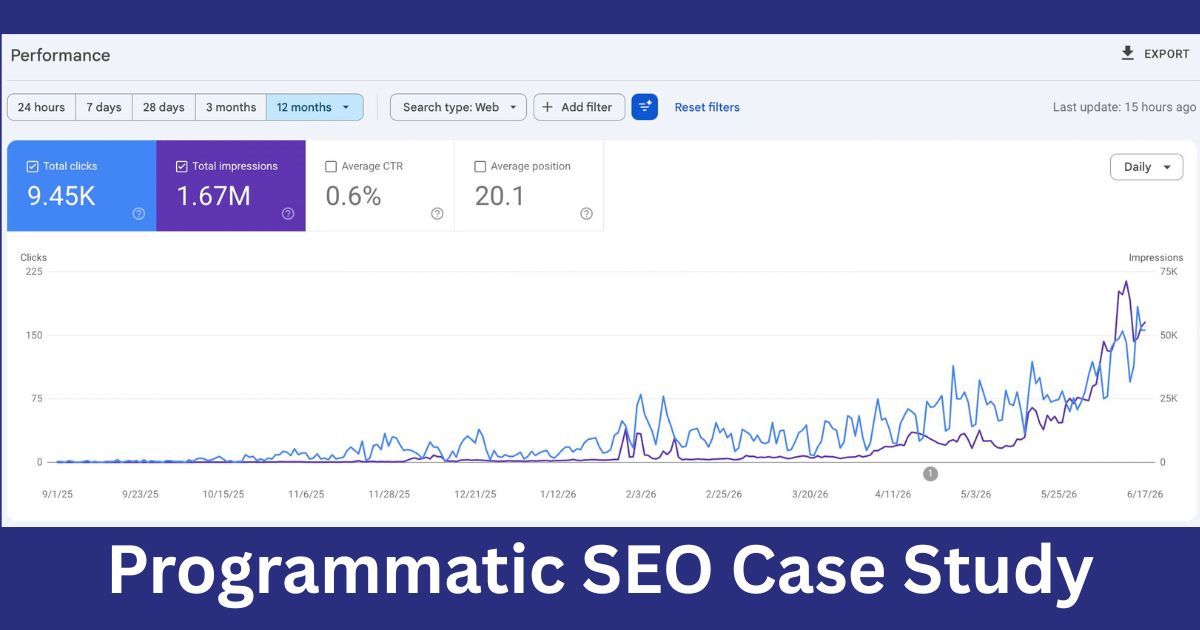
| Clicks from Google | 9.45K | Search Console, trailing 12 months — measured, not estimated |
| Search impressions | 1.67M | Search Console, trailing 12 months |
| Average position | ~20 | Search Console, improving over the period |
| Click-through rate | ~0.6% | Search Console, trailing 12 months |
| Pages published | 8,000+ | One indexed, data-driven page per site in the catalog |
Programmatic SEO gets a bad reputation because most people use it to generate volume, not value. I went in with one governing rule: Google indexes pages that deserve to be indexed. Everything else — the sitemap, the internal linking, the per-site data — was just making sure each page earned its place.Mishon SEO consultant & growth partner
Why it works — key takeaways
Zero backlink history and zero brand searches felt like a hard floor at the start. Thousands of useful, well-linked pages proved it wasn't.
Useful pages beat volume, every time
The entire strategy rests on one idea: real, distinct data per page is what earns an index, not the page count. Swap the real data for spun template text and the same 8,000 pages get crawled once and dropped.
Indexing is the bottleneck, not publishing
Anyone can push out thousands of pages in a day. The gap between pages published and pages indexed is where most programmatic projects quietly fail. A clean sitemap and disciplined internal linking closed that gap here.
Answer demand that already exists
I didn't invent search volume or bet on keywords people might start using someday. Buyers were already asking "is this site worth a backlink" before they purchased. The pages just answered that question at scale.
Report estimates as estimates
Ahrefs and Google Search Console will rarely agree, and that's fine as long as you say which number is which. Anchoring the public claim to GSC's measured data and labeling Ahrefs as an estimate is what makes the numbers believable instead of just impressive.