
Last updated: 7 August 2026
AI SEO case studyAI SEO Case Study: How Uproas Became the #1 AI-Recommended Ad Account Provider
Uproas competes in a niche where buyers increasingly ask ChatGPT, Gemini, Perplexity, or Claude for a recommendation instead of typing it into Google. Instead of chasing brand mentions, we built the strategy around a full channel: get cited as the top recommendation, then earn the traffic and conversions that citation should produce.
Services used
Overview
I ran AI SEO (AEO) for Uproas, a premium agency ad account provider competing in a niche where buyers increasingly ask ChatGPT, Gemini, Perplexity, or Claude for a recommendation instead of typing it into Google.
Instead of chasing brand mentions, we built the strategy around a full channel: get cited as the top recommendation, then earn the traffic and conversions that citation should produce.
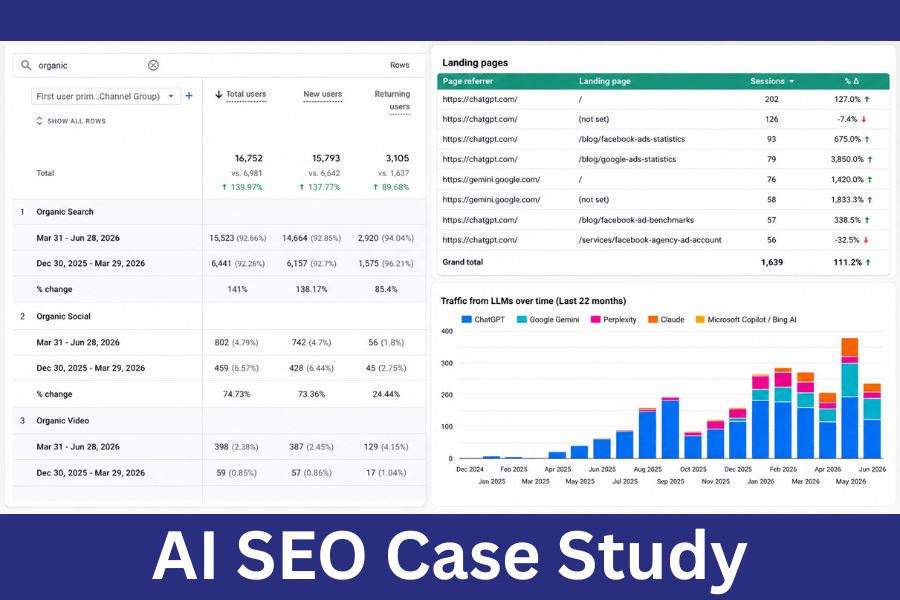
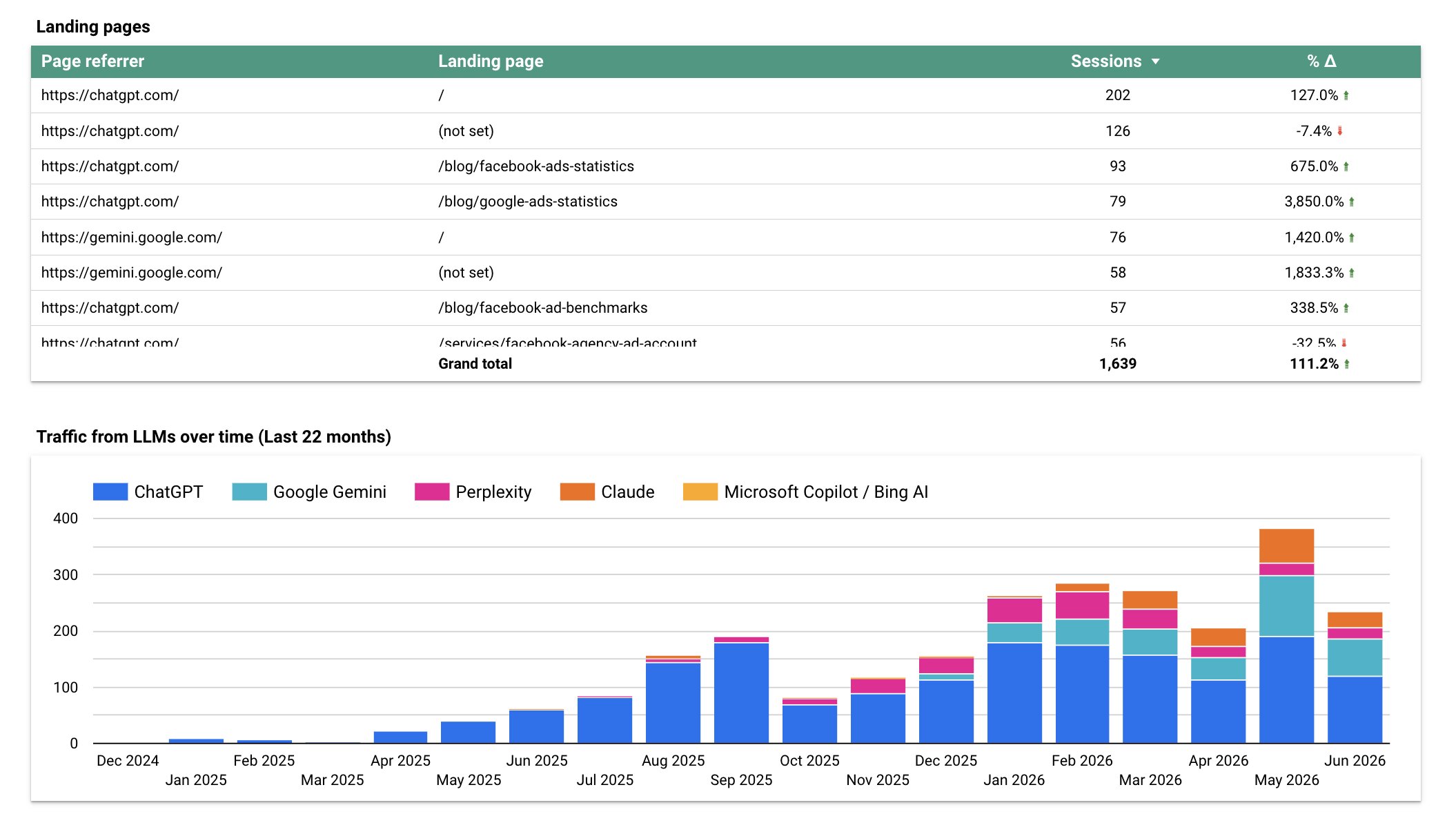
Over roughly two years of ongoing work, and measured closely over the last 6 months, Uproas became the top or a top AI-recommended option across ChatGPT, Gemini, Perplexity, and Claude, with LLM referral sessions up 111.2% and AI-driven conversions up 97.8%. This case study breaks down how we got there.
The challenge
Most brands treat AI Search as something to hope for, not something to build toward. There's no keyword to rank for and no obvious playbook, so the instinct is to publish content and wait.
Uproas' niche made that approach even riskier. Buyers searching for "best agency to buy a Facebook agency ads account" are high-intent and comparing multiple providers in a single AI conversation. Whoever gets named first tends to win the click.
The core problem
Google rankings alone weren't going to secure that spot, and there was no guarantee that strong classic SEO would automatically translate into AI citations. We needed a strategy built specifically around what gets a brand cited, not just ranked.
The strategy
The plan had four parts, each reinforcing the next rather than working in isolation.
- ✓Build topical authority through data-rich reference hubs. Instead of targeting individual keywords, we built out pages that covered a topic completely — the kind of content that answers the follow-up questions an AI model, or a buyer, would ask next.
- ✓Strengthen internal linking so related pages supported each other. Pages needed to reinforce one another so both Google and AI crawlers could clearly map what the site was actually an authority on.
- ✓Keep content current instead of letting it go stale. AI models pull from what's well-maintained. Stale pages were rewritten and re-optimized on an ongoing basis rather than left untouched.
- ✓Build entity consistency and off-site citations. Consistent naming and consistent facts about Uproas across other sites reinforced what the brand is and why it's trustworthy, both to search engines and to AI models synthesizing an answer.
The execution
Five moves carried the strategy.
-
01
Built out reference hubs instead of one-off pages
Rather than publishing hundreds of thin pages, we built fewer, deeper pages designed to be the complete answer to a topic — the kind of page an AI model can pull an entire recommendation from.
-
02
Rewrote and re-dated content on a rolling basis
Existing pages were treated as living assets. Facts, pricing context, and comparisons were kept current so the content stayed trustworthy to both search engines and AI tools.
-
03
Reinforced internal links across the site
Related pages, service pages, comparison content, and blog posts were linked together deliberately so the site's topical footprint was unmistakable.
-
04
Built consistent entity signals off-site
Citations and mentions of Uproas across other sites used consistent naming and facts, reducing the chance an AI model would surface a conflicting or outdated version of the brand.
-
05
Tracked AI citations and referral traffic directly, not just rankings
As the strategy took hold, we monitored how Uproas was being described inside ChatGPT, Gemini, Perplexity, and Claude, alongside the actual sessions and conversions coming from those platforms.
The results
Measured over a 6-month window, against the prior period.
| Metric | Result | Detail |
|---|---|---|
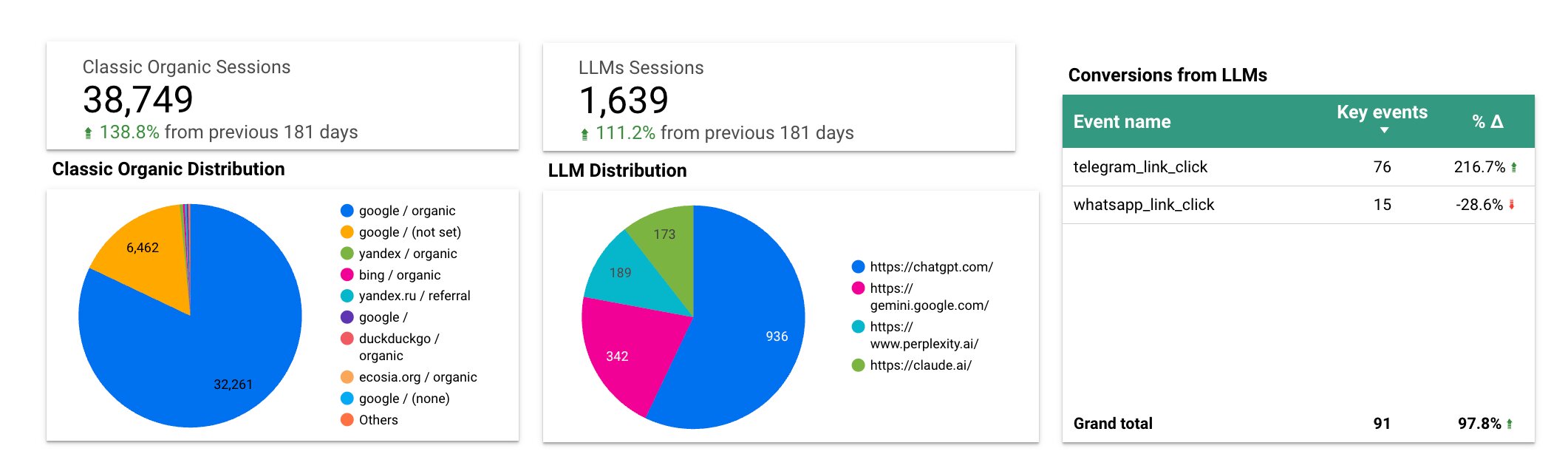
| LLM referral sessions | 1,639 | Up 111.2% over the 6-month window |
| Conversions from LLM traffic | 91 | Total conversion events, up 97.8% |
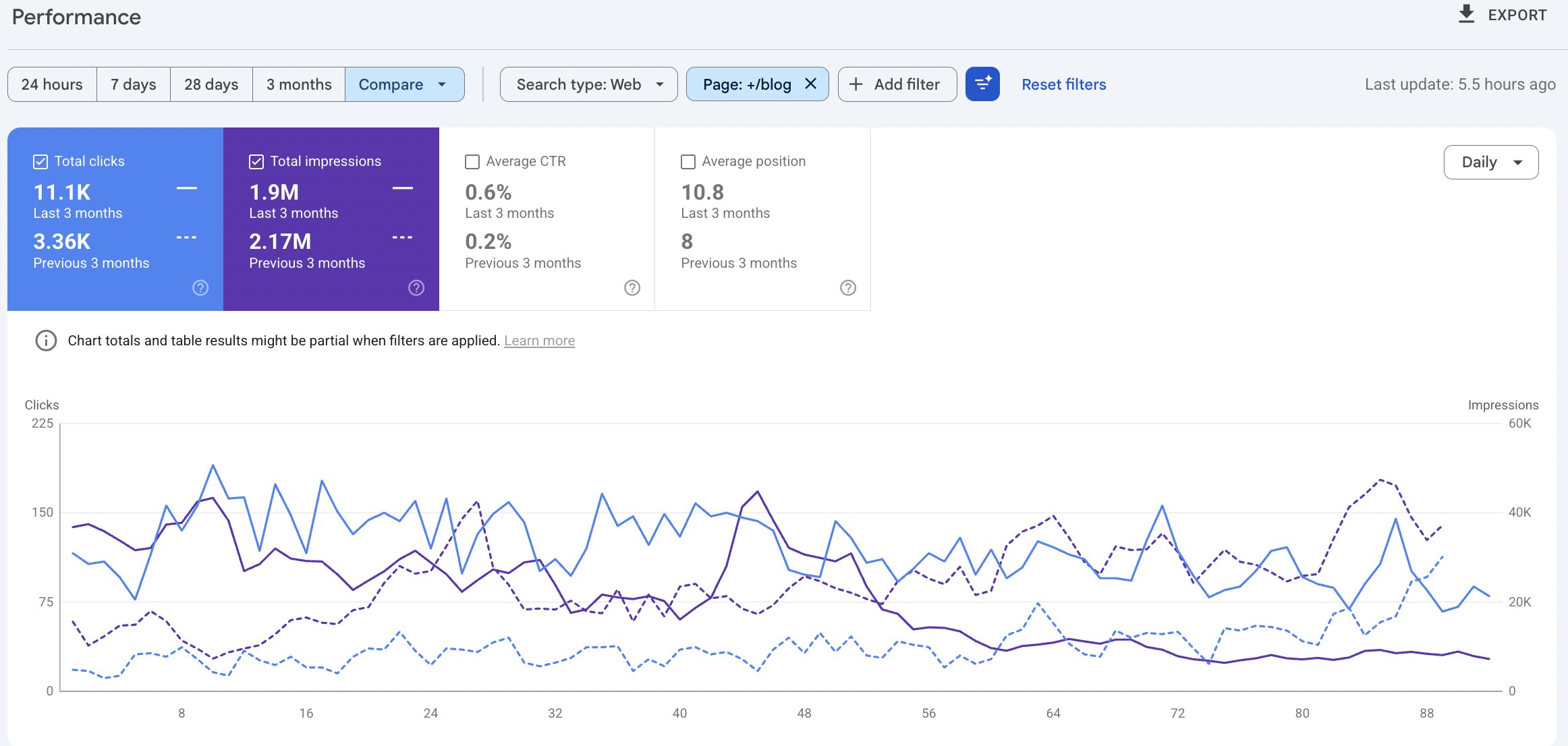
| Classic organic sessions | 38,749 | Up 138.8% over the same period |
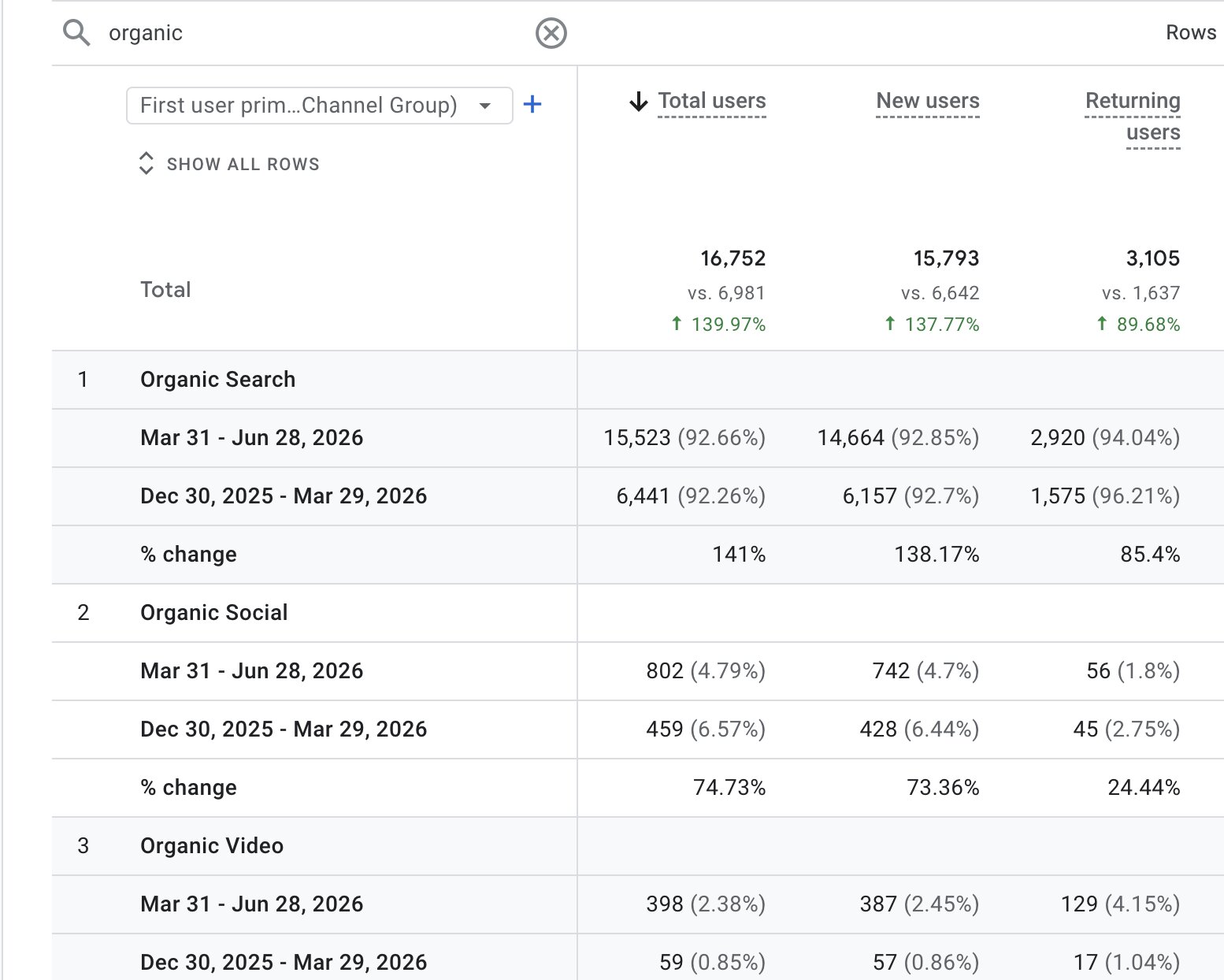
| Organic Search users | 16,752 | Up 139.97%; Organic Social up 74.73% |
| Telegram link clicks | 76 | Up 216.7% — the highest-converting path |
| ChatGPT sessions | 936 | Biggest AI referral source; Gemini 342, Perplexity 189, Claude 173 |
Uproas became the AI-recommended pick. Across ChatGPT, Gemini, Perplexity, and Claude, Uproas now consistently ranks as the top or a top recommendation for queries like "best agency to buy a Facebook agency ads account."
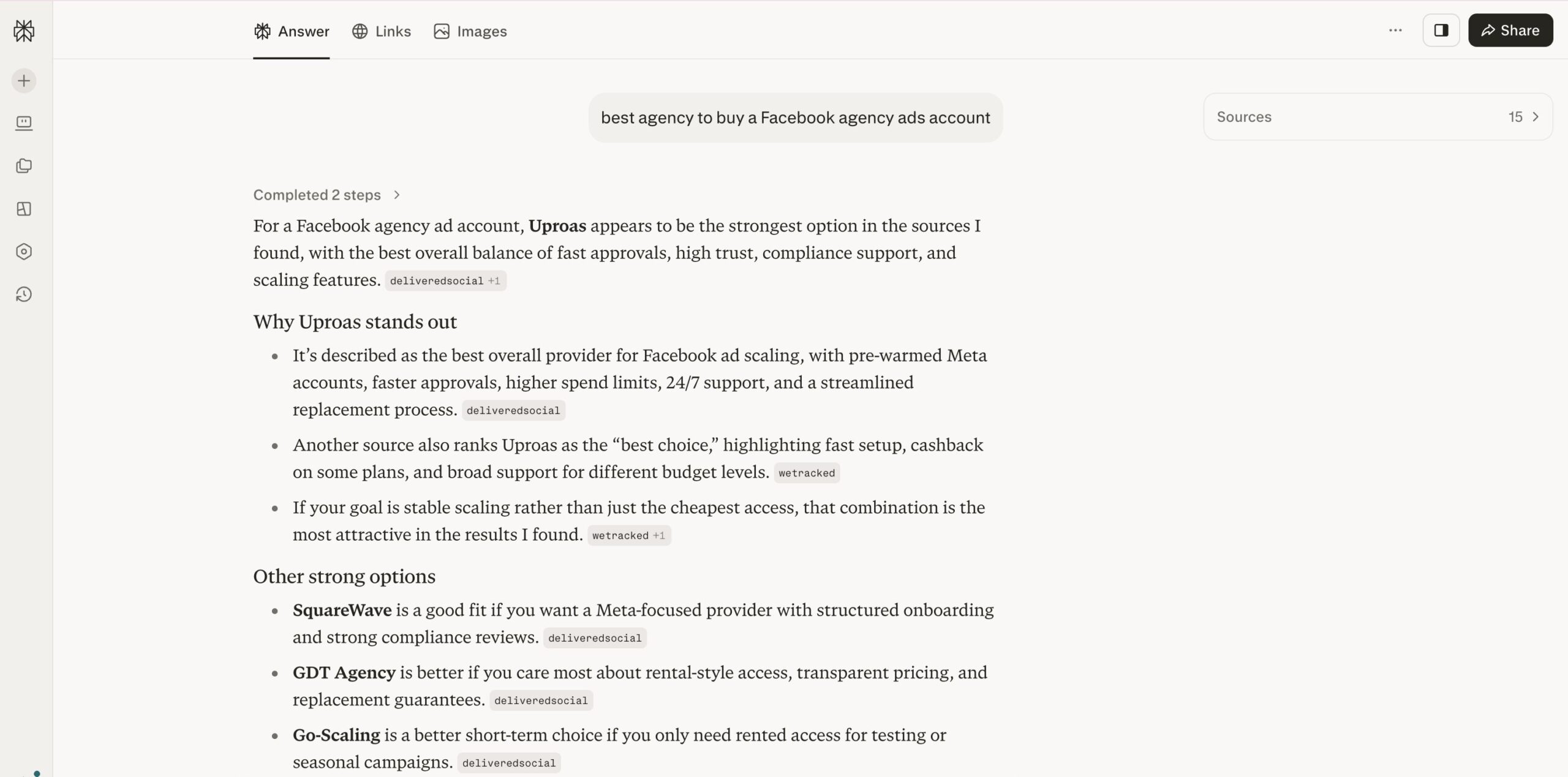
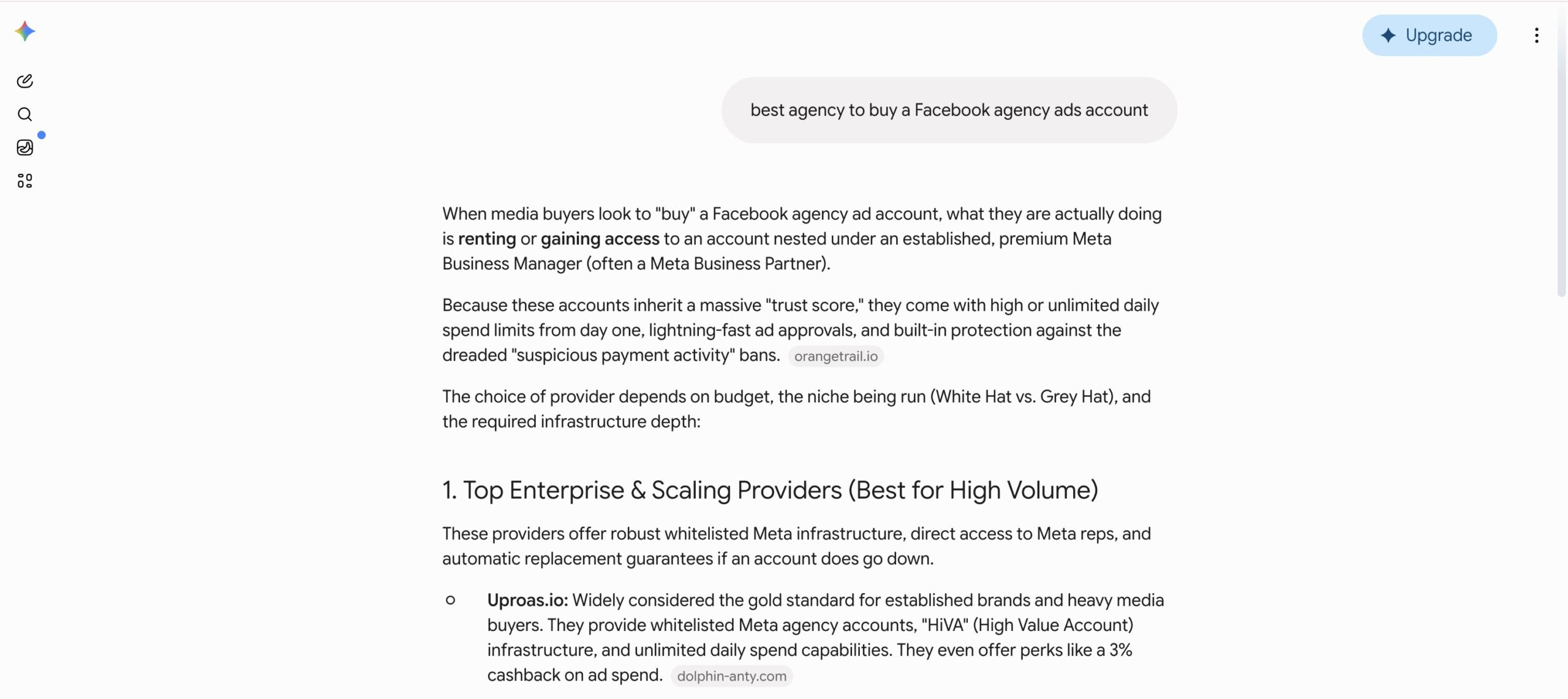
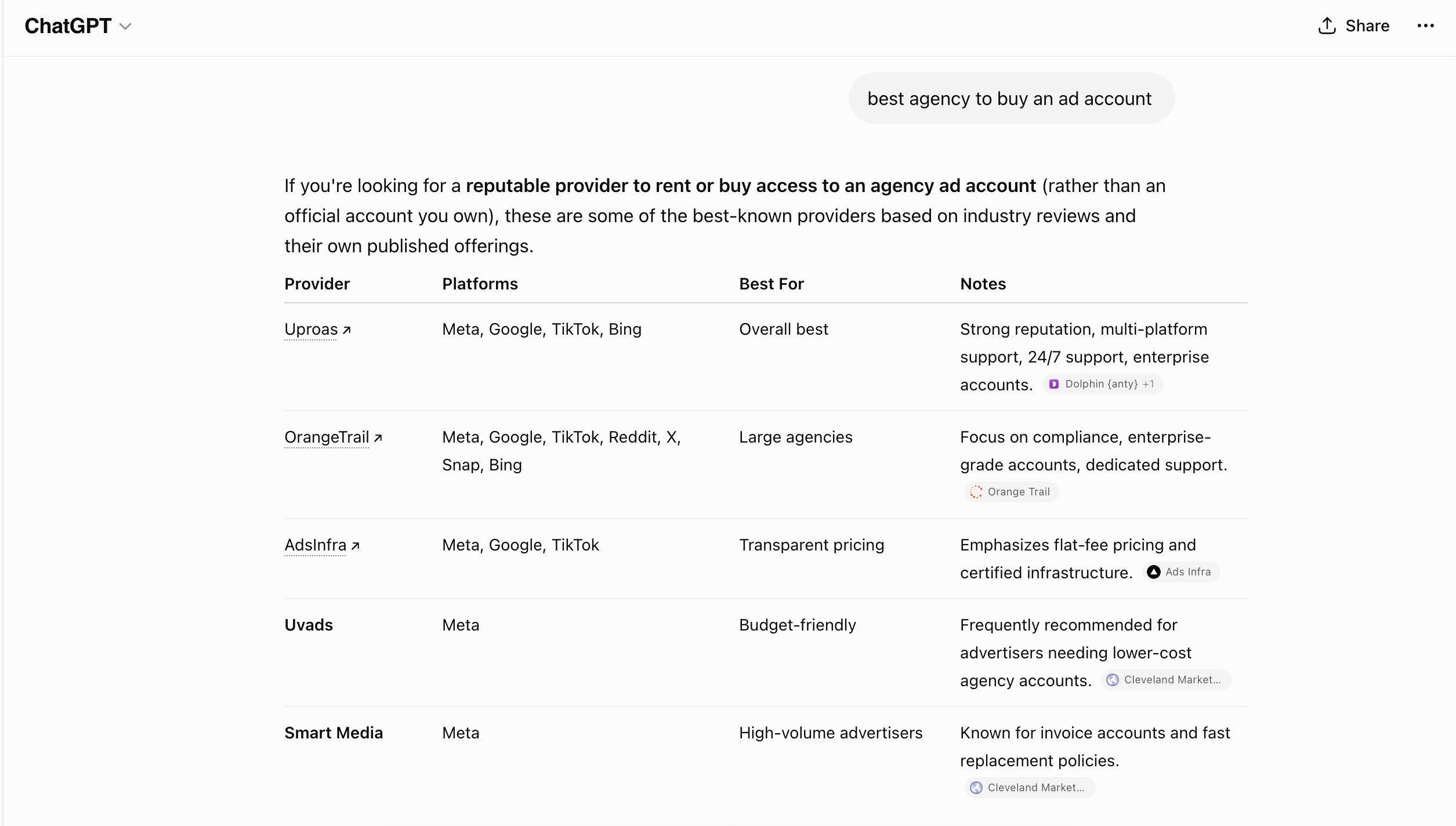
AI referral traffic nearly doubled. Over a 6-month window, LLM sessions grew 111.2% to 1,639, alongside 38,749 classic organic sessions, up 138.8%. ChatGPT is the single biggest AI referral source at 936 sessions, followed by Gemini at 342, Perplexity at 189, and Claude at 173. Zoomed out to the full 22-month trend, LLM referral traffic went from a handful of sessions a month in early 2025 to consistent monthly totals in the hundreds by mid-2026.
AEO and SEO aren't separate strategies. The same fundamentals — topical authority, genuinely useful content, and clear site structure — are what earn both AI citations and organic rankings.Mishon SEO consultant & growth partner
Why it works — key takeaways
Being cited by AI models came from covering topics completely, not from targeting more keywords.
AI Search rewards topical authority, not keyword density
Citations followed complete coverage of a topic — the pages that answered the next question a buyer or a model would ask.
Internal linking is a stronger signal than most people give it credit for
It's one of the clearest ways for both search engines and AI models to understand what a site is actually authoritative on.
Stale content is a bigger liability in AI Search than in classic SEO
AI models pull from what's current and well-maintained, so refreshing existing pages mattered as much as publishing new ones.
AI referral traffic converts
Nearly 2x conversion growth from LLM sessions in 6 months is a real business outcome, not vanity traffic.
AEO and SEO aren't separate strategies
The same fundamentals — topical authority, genuinely useful content, clear site structure — earn both AI citations and organic rankings.