
Last updated: 7 August 2026
Ecommerce SEO case studyEcommerce SEO Case Study: Turning a Jewelry Brand Into a Full-Funnel Organic Growth Engine
Instead of chasing a handful of product keywords in one of the most crowded, keyword-expensive niches online, we built a full-funnel organic system: blog content to pull people in at the top, collection and product pages to convert them, and a technical foundation solid enough to let all of it scale.
Services used
Overview
I ran SEO for a luxury jewelry ecommerce brand competing in one of the most crowded, keyword-expensive niches online.
Instead of chasing a handful of product keywords, we built a full-funnel organic system: blog content to pull people in at the top, collection and product pages to convert them, and a technical foundation solid enough to let all of it scale.
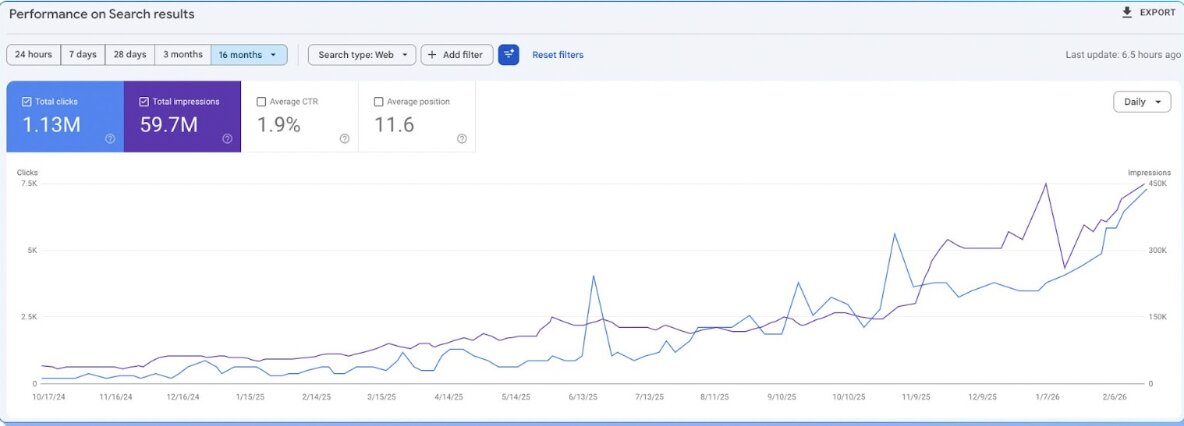
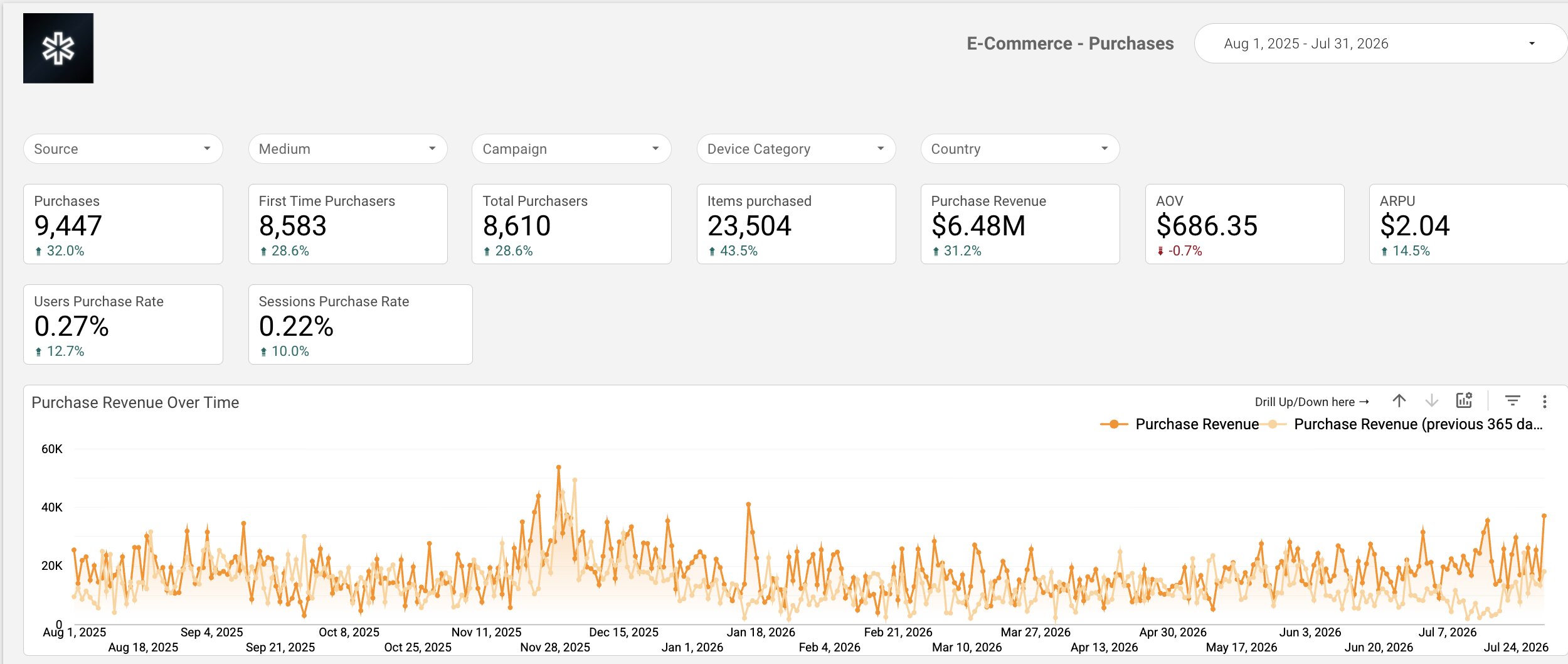
In 16 months, the site went from a small, inconsistent organic channel to over 1.1 million clicks and 59.7 million impressions month over month, with purchase revenue crossing $6.4 million in the last 12 months alone. This case study breaks down how we got there.
The challenge
Jewelry is a brutal niche for SEO. Search intent ranges from someone reading a listicle about celebrity net worth to someone ready to spend four figures on a ring, and most brands only optimize for the second group. That leaves the entire top and middle of the funnel open.
The brand had product and collection pages that could convert, but no content engine feeding traffic into them, no backlink profile to speak of, and enough technical debt that growth would have capped out before it started.
The core problem
We needed a system that captured demand at every stage, not just bottom-funnel commercial searches.
The strategy
The plan had four parts, each feeding the next rather than working in isolation.
- 1Fix the technical foundation first. None of the content or backlink work matters if the site is slow, broken, or hard for Google to crawl at scale.
- 2Build topical authority through blog content. Use top-of-funnel, high-search-volume topics to pull in traffic and earn backlinks on their own, without outreach.
- 3Optimize collection and product pages for commercial intent. Rewrite and restructure these to match what buyers are actually searching for, not just a keyword.
- 4Fix the conversion journey. Traffic only matters if it turns into revenue, so trust signals and checkout experience needed work too.
The execution
Seven moves, running top of funnel to checkout.
-
01
Got site health as close to perfect as possible
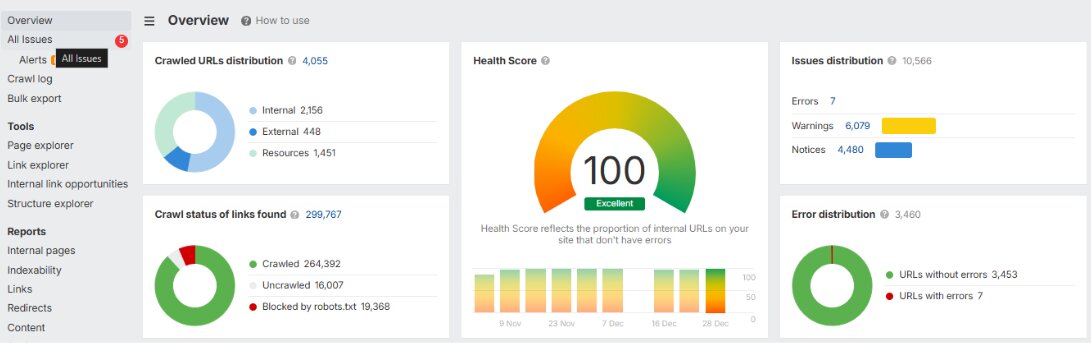
With thousands of pages, small technical issues compound fast. We tracked and fixed these continuously so nothing capped the growth once content and links started scaling.
-
02
Built high-intent blog content around top-of-funnel searches
One post alone, built around a broad, high-volume topic in the jewelry and culture space, became a traffic and authority magnet on its own.
-
03
Let strong content pull in backlinks naturally
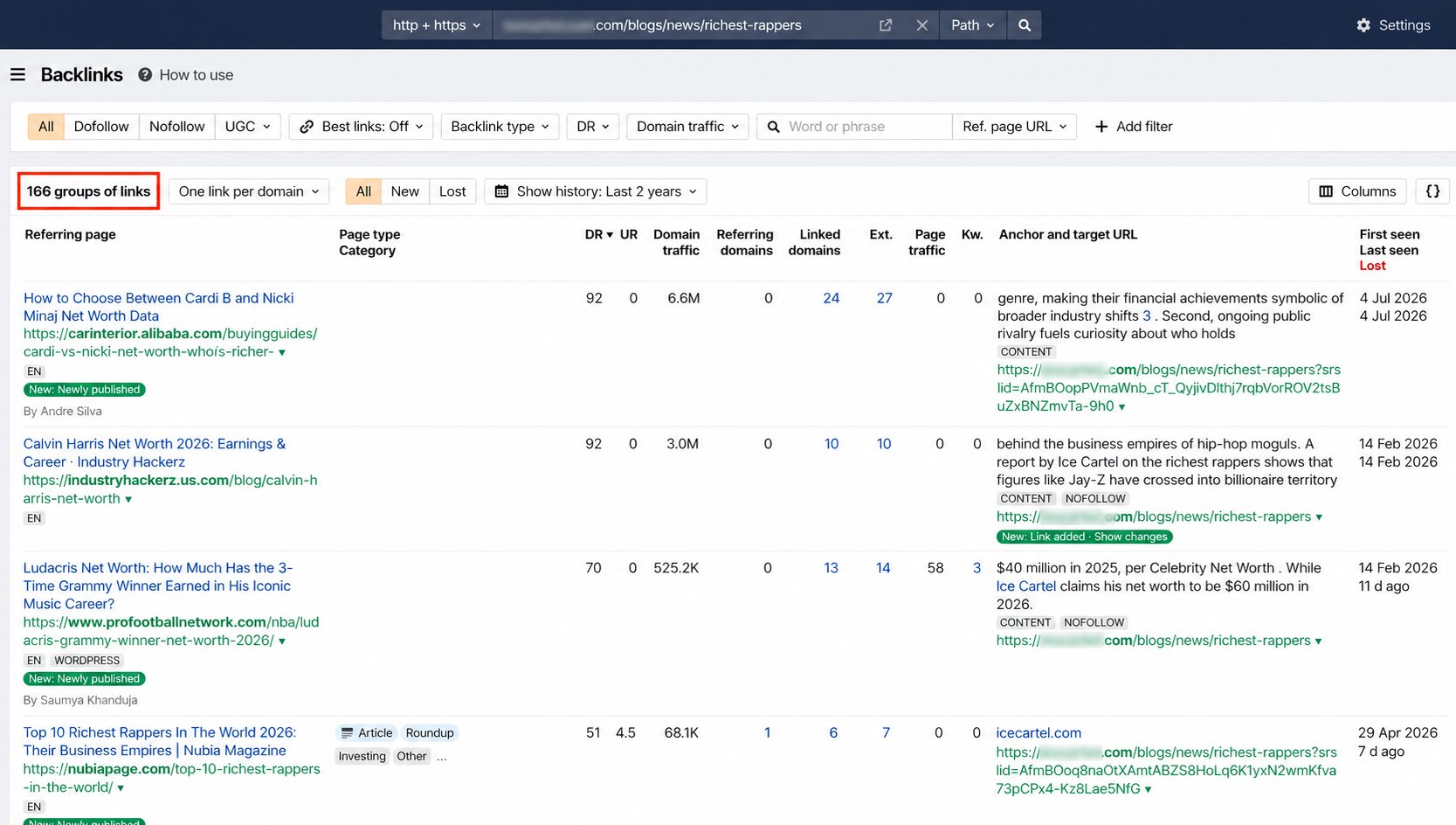
That single post picked up 166 groups of referring links, including from sites with domain ratings above 90, without a single outreach email.
-
04
Optimized collection pages for commercial keywords
These pages target the exact terms people use when they're ready to browse and compare, not just informational searches.
-
05
Rebuilt product pages around real buyer intent
Product pages were restructured to rank for high-intent, closer-to-purchase searches rather than generic product names.
-
06
Tightened the conversion journey
We improved trust signals and the checkout experience so more of the traffic we were now earning actually converted.
-
07
Tracked visibility inside AI answers, not just search rankings
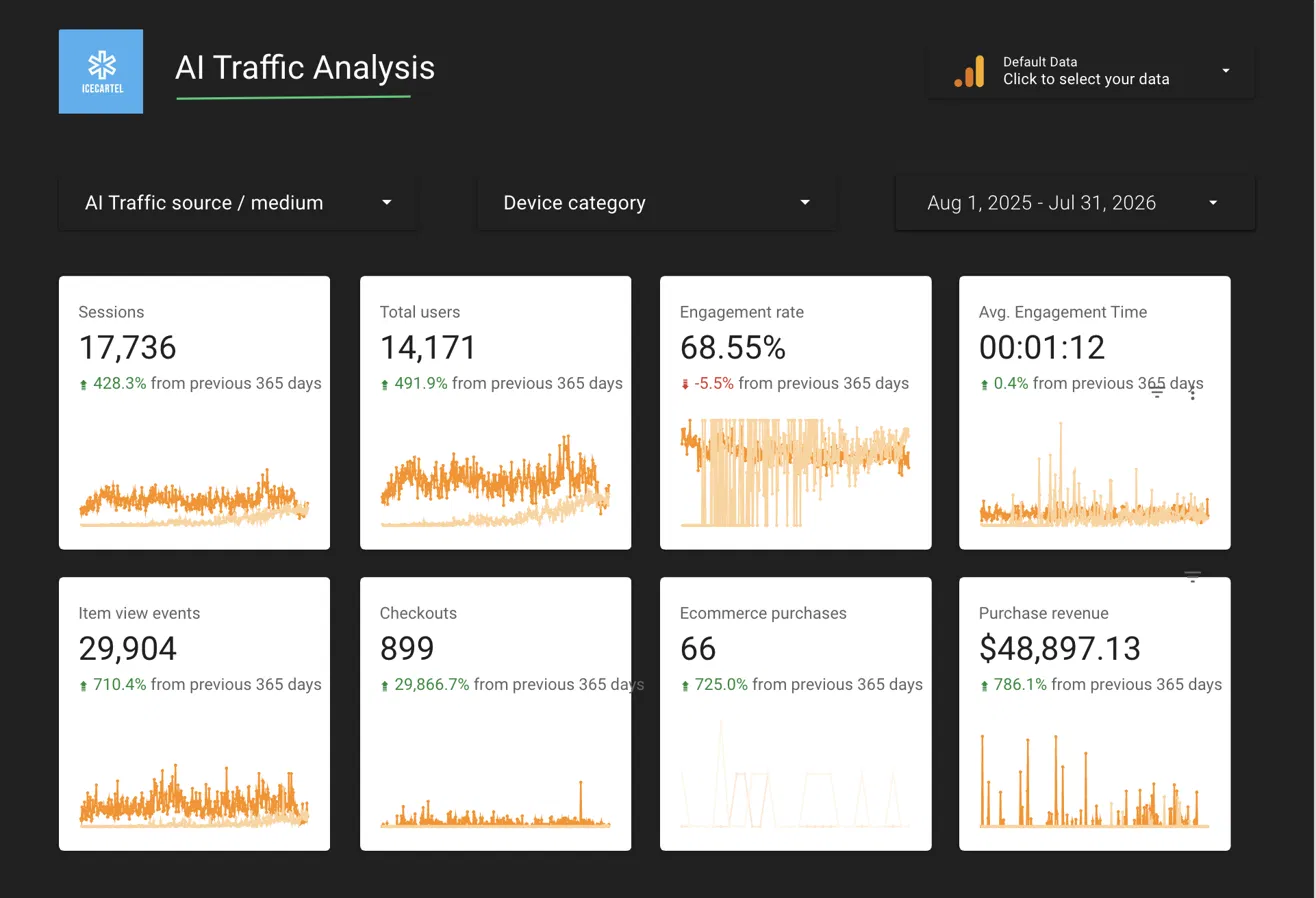
As the content and authority built up, the brand started showing up as a cited source inside AI platforms like ChatGPT and Perplexity, not just in blue links.
The results
Sixteen months of compounding, measured across the whole funnel.
| Metric | Result | Detail |
|---|---|---|
| Clicks from Google | 1.13M | Over 16 months; average position improved to 11.6 |
| Search impressions | 59.7M | Same 16-month window |
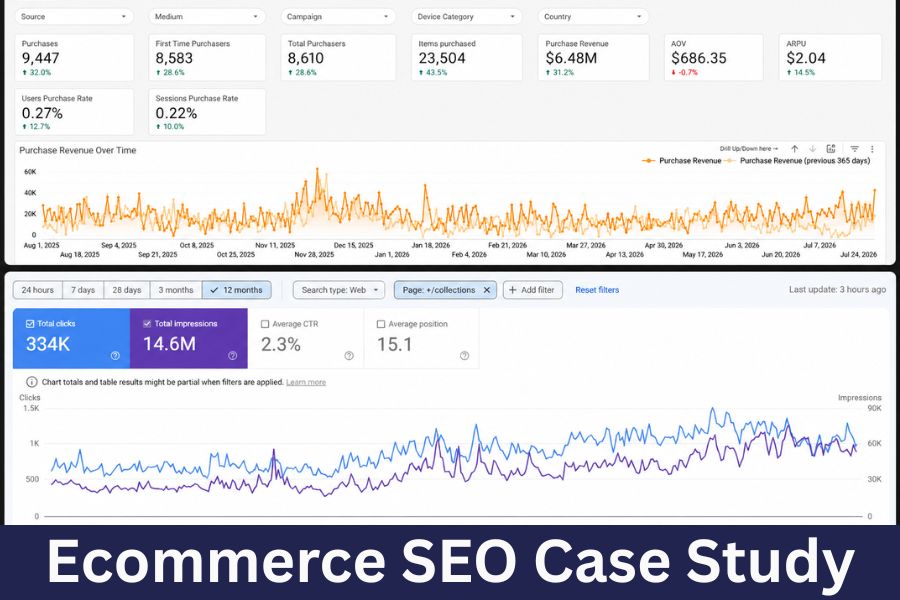
| Purchase revenue | $6.48M | Last 12 months, up 31.2% |
| Purchases | 9,447 | Up 32%; revenue per user up 14.5% to $2.04 |
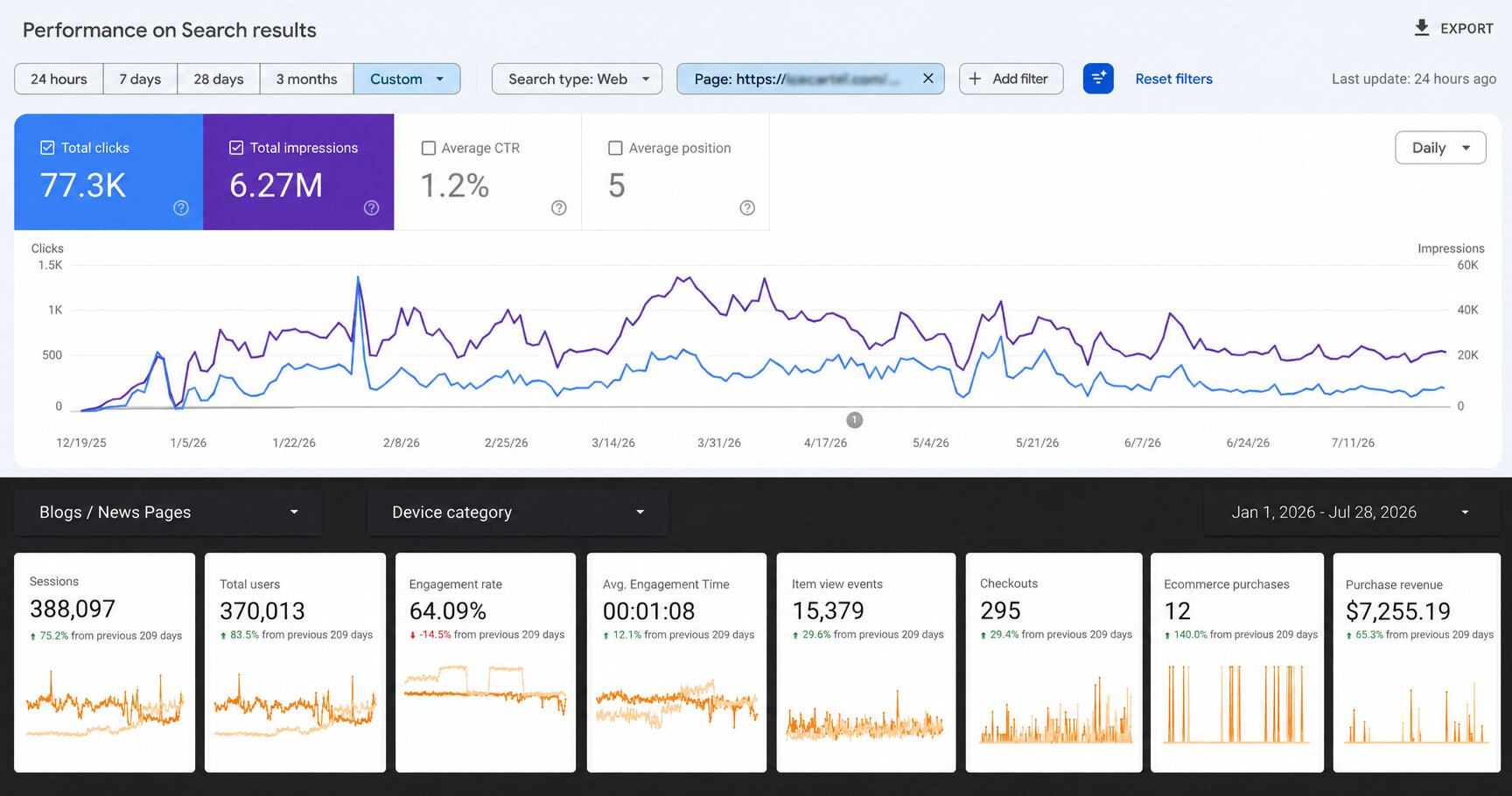
| Blog & news sessions | 388,097 | Up 75.2%; 370,013 users, up 83.5% |
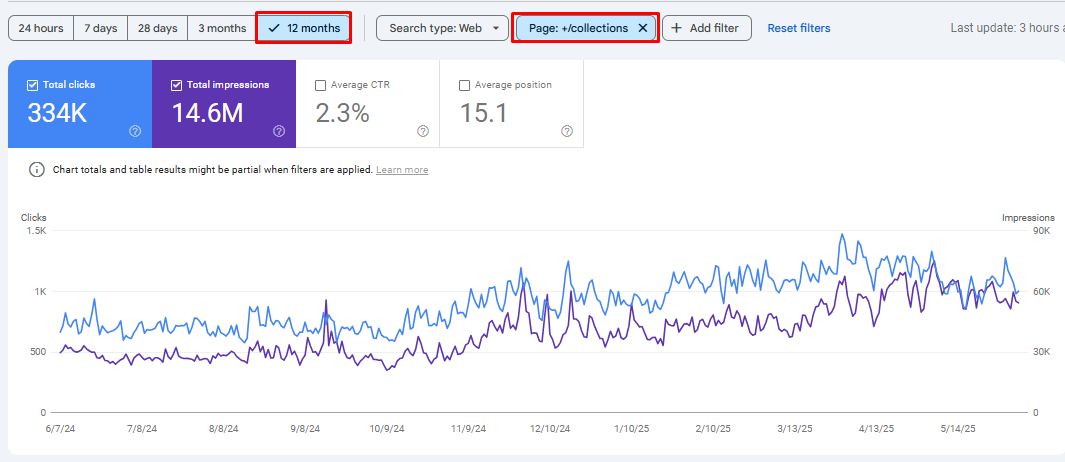
| Collection page clicks | 334K | 14.6M impressions over 12 months |
| AI-sourced sessions | 17,736 | Up 428.3%; $48,897 revenue from them, up 786.1% |
| Site health score | 100/100 | 4,000+ URLs crawled; 7 errors across 3,460 categorized |
Client satisfaction
The numbers held up outside the dashboards too. After Q1 2026 closed, the brand's founder sent a company-wide update recapping the quarter, and the SEO team was called out by name alongside the CMO and other core leads for helping drive record quarterly profits, up more than 50% year over year.
That kind of recognition — unprompted and internal rather than something written for a testimonial — is the clearest sign the work was actually moving the business, not just the traffic charts.
Blog content, collection pages, product pages, and conversion work all fed each other. That's what turned a jewelry brand's SEO from a side channel into its main growth engine.Mishon SEO consultant & growth partner
Why it works — key takeaways
Most brands in this niche optimize only for the buyer who is already ready to spend. That leaves the entire top and middle of the funnel on the table.
Top-of-funnel content earns links that money pages never will
A blog post built around a broad, high-interest topic pulls in backlinks and traffic that a product page never could on its own.
Commercial pages need their own optimization pass
Collection and product pages convert when they're built around real buying intent, not just stuffed with the product name.
AI visibility is now a revenue channel, not a vanity metric
Getting cited inside AI answers brought in real sessions and real purchases, on top of traditional search.
Technical health is the ceiling on everything else
None of the content, backlink, or conversion work shows up in the numbers if the site itself can't be crawled and indexed at scale.
Full-funnel beats single-channel every time
Blog content, collection pages, product pages, and conversion work all fed each other — that's what turned SEO into the main growth engine.